How Accurate Is Your Fitness Tracker, Really? What to Trust and What to Ignore
Your fitness tracker throws numbers at you all day — steps, calories, heart rate, sleep stages — but they’re not all equally accurate, and treating a rough estimate as gospel can mislead you. The fittech guide: the accuracy reality, what to trust and how to use it wisely.
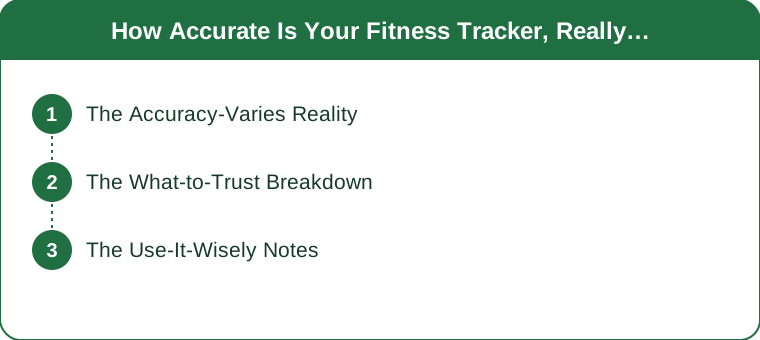
The Accuracy-Varies Reality
Why tracker accuracy is uneven: the some-metrics-are-solid-some-rough (the some metrics accurate, others rough-estimates from the fitness-tracker-guide chapter — the the-mixed-accuracy; the not-all-equal), the the-estimate-not-gospel (the many numbers being estimates, not precise from the fitness-tracker-guide chapter — the the-estimate; the rough-numbers), the treating-them-as-truth-misleads (the over-trusting estimates misleading you from the fitness-tracker-obsession chapter — the the-danger; the don’t-over-trust), the the-trends-over-absolutes (the trends being more-useful than absolute-numbers from the fitness-tracker-guide chapter — the the-trends; the trend-not-number), and the reframe (the tracker-data as mixed-accuracy estimates, useful-as-trends not gospel).
The What-to-Trust Breakdown
What to trust and what to take loosely: the the-steps-fairly-reliable (the step-counts being reasonably-reliable from the fitness-tracker-guide chapter — the the-steps; the fairly-solid), the the-heart-rate-decent-at-rest (the heart-rate being decent at-rest, less-so in-intense-intervals from the heart-rate-zones-wearables chapter — the the-heart-rate; the good-at-rest), the the-calories-are-estimates (the calorie-burn being a-rough-estimate (often off) from the fitness-tracker-guide chapter — the the-calories; the take-loosely), the the-sleep-stages-are-rough (the sleep-stage detail being rough (duration more-reliable) from the sleep-tracking-worth-it chapter — the the-sleep; the duration-over-stages), the the-distance-and-pace (the GPS distance/pace being fairly-good — the the-gps; the reasonably-accurate), the the-vo2-and-fancy-metrics (the advanced metrics (VO2, recovery) being estimates — the the-fancy-metrics; the loosely), the the-trends-are-the-value (the the-trends-over-time being the real-value from the fitness-tracker-guide chapter — the the-trends; the track-the-trend), and the the-consistency-of-error (the consistent-error making trends-still-useful — the the-consistency; the trend-despite-error).
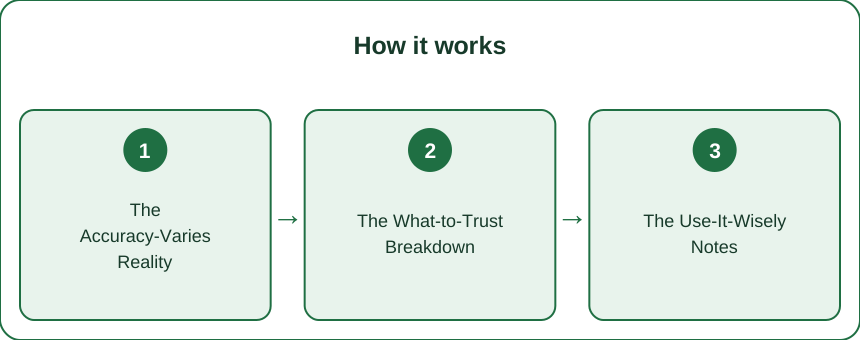
The Use-It-Wisely Notes
Using tracker data wisely: the use-trends-not-absolutes (the watching trends over exact-numbers from the fitness-tracker-guide chapter — the the-trends; the trend-not-number), the the-dont-obsess (the not-obsessing over the numbers from the fitness-tracker-obsession chapter — the the-anti-obsession; the don’t-fixate), the the-take-calories-loosely (the treating calorie-numbers as rough from the fitness-tracker-guide chapter — the the-calories; the loosely), the the-listen-to-your-body-too (the your-body’s signals alongside the data from the fitness-tracker-obsession chapter — the the-body; the feel-and-data), the the-privacy-awareness (the fitness-data privacy from the fitness-data-privacy chapter — the the-privacy; the mind-the-data), the the-motivation-if-it-helps (the trackers as motivation, if they-help-not-stress from the fitness-tracker-obsession chapter — the the-motivation; the if-it-helps), the the-free-vs-paid (the free-vs-paid features worth-it or not from the running-app-free-vs-paid chapter — the the-value; the do-you-need-paid), and the frame (fitness-tracker-data as mixed-accuracy estimates trusted-as-trends-not-absolutes, used-wisely-without-obsession — what to trust and what to ignore. Your tracker’s steps and GPS distance are fairly reliable; heart rate is decent at rest, calories are rough estimates, and sleep stages are loose (duration is better). Use the trends over the absolute numbers, don’t obsess, take calories loosely, listen to your body too, and mind your data privacy: what to trust and what to ignore.
Your fitness tracker throws numbers at you all day — but they’re not all equally accurate, and treating a rough estimate as gospel can mislead you. What to trust: steps and GPS distance are fairly reliable, heart rate is decent at rest (less so in intense intervals). Take loosely: calorie burn (a rough, often-off estimate), sleep stages (duration is more reliable), and fancy metrics (VO2, recovery). The real value is trends over time, not absolute numbers. Use it wisely — watch trends not absolutes, don’t obsess, take calories loosely, listen to your body, and mind your data privacy. What to trust and what to ignore.
Keep Reading
This article is for general informational and styling purposes only. Fit, sizing, and product availability may vary.