Fitness Trackers for Women: What the Data Actually Tells You (and What to Ignore)
The wearable industry has a product for every wrist, finger and sports bra band — and a metric for every insecurity: readiness scores, strain scores, body battery percentages. Some of this data genuinely improves training and health awareness; a surprising share is precision theater — confident numbers built on wobbly estimates. The skill of fitness tech is knowing which is which. Here is the honest guide: what trackers measure well, what they guess at, which device tier fits your actual life, and how to use the data without it using you.

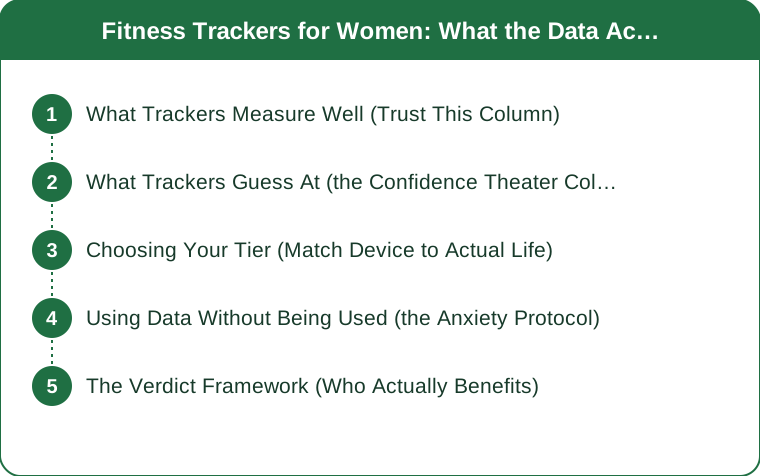
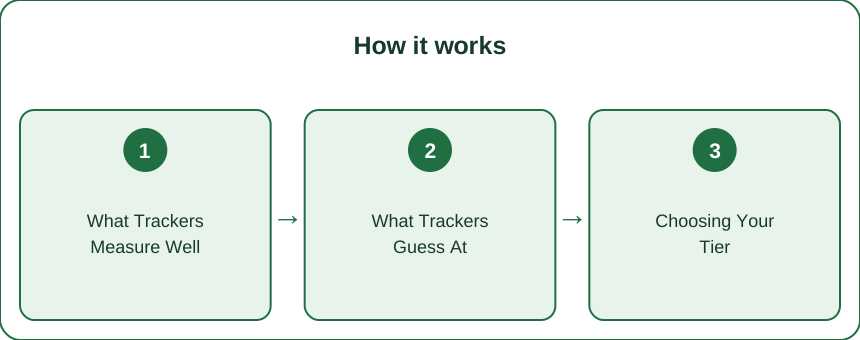
What Trackers Measure Well (Trust This Column)
The reliable metrics: steps and general movement volume (imperfect counts, excellent trends — the daily-movement accountability that made trackers famous still works), heart rate at rest and during steady cardio (wrist-optical HR is solid at rest and rhythmic exercise; resting-heart-rate trends are a legitimately useful fitness and illness-detection signal), workout duration and consistency logging (the streak psychology is real), and sleep duration (not stages — duration; the bedtime-accountability effect alone improves many users’ sleep). The pattern: trackers excel at trends over time and struggle with absolute precision — which conveniently is exactly how they should be read.
What Trackers Guess At (the Confidence Theater Column)
The estimates wearing precision costumes: calorie burn (algorithmic guesses with error margins studies put at 20–40-plus percent — eating back your watch’s exercise calories is how trackers quietly sabotage weight goals; treat the number as a comparative index, never a food budget), sleep stages (wrist devices infer stages from movement and HR — directionally interesting, clinically decorative), stress and readiness scores (HRV-based composites with real inputs and opaque math — useful as gentle trend flags, absurd as daily verdicts), and VO2max estimates (flattering fiction for most). None of this makes trackers useless. It makes their decimal points a design choice, not a measurement.

Choosing Your Tier (Match Device to Actual Life)
The market, sorted by honest use case: basic bands ($30–60 — steps, HR, sleep duration, weeks of battery; the underrated right answer for most walkers and casual exercisers), mid-tier smartwatches ($150–300 — adds GPS for runners, better screens, app ecosystems; the sweet spot for regular trainers), premium multisport watches ($400-plus — genuine tools for endurance athletes with training loads to manage; expensive jewelry for everyone else), and screenless rings ($300 plus subscriptions — the sleep-and-recovery specialists for people who hate wrist-wear; weakest at actual workout tracking). The honest question before buying: which two metrics will you act on? Buy for those. The other forty ship regardless.
Using Data Without Being Used (the Anxiety Protocol)
The dark pattern to avoid: tracker anxiety is documented — sleep-score obsession that worsens sleep (orthosomnia has entered the clinical vocabulary), streak-preservation workouts on injury days, and the demoralizing gap between effort and algorithm. The healthy-use protocol: check trends weekly rather than scores hourly, let the body outvote the watch (feeling great on a low readiness score means the score is wrong — go train), take deliberate tracker sabbaticals (a naked-wrist week per quarter recalibrates internal signals), and never let a device grade rest days — rest is training; the algorithm just cannot see the adaptation. The tracker is a rearview mirror, not a coach. Glance, don’t stare.
The Verdict Framework (Who Actually Benefits)
Fitness tech’s honest value map: highest returns go to habit-builders (the accountability effect of visible movement data is the best-evidenced benefit in the entire category — for sedentary-to-active transitions, a $40 band routinely outperforms a $400 watch in behavior change per dollar), runners and cyclists (GPS pacing and training logs are genuine tools), and data-motivated personalities who enjoy the numbers as a hobby (a legitimate use — fun counts). Lowest returns: anxious perfectionists (see protocol above), and anyone buying a device to outsource motivation the device cannot supply. The tracker records the life. It has never once lived it — that part, gloriously, remains manual.
Fitness trackers, right-sized: trust the trends (steps, resting HR, consistency, sleep duration), discount the theater (calorie burns, stage charts, readiness verdicts), buy the tier matching the two metrics you will actually act on, and audit weekly rather than hourly. Used this way, a tracker is what it always should have been: a quietly useful mirror on your habits — worn by a woman who remains, at all times, the one holding the verdicts.
Keep Reading
This article is for general informational and styling purposes only. Fit, sizing, and product availability may vary.