Should You Actually Trust Your Fitness Tracker's Recovery Score?
A fitness tracker’s recovery or readiness score presents itself as a confident, precise single number, and the actual data and assumptions behind that number carry considerably more uncertainty than the clean display suggests. Here is what actually feeds into that score and how to use it appropriately rather than treating it as gospel.

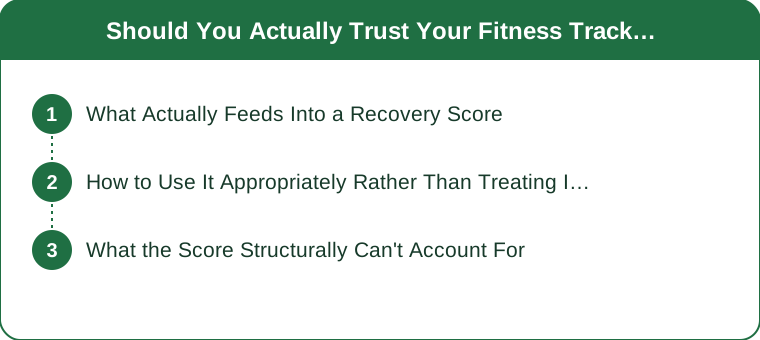
What Actually Feeds Into a Recovery Score
The underlying inputs: the heart-rate-variability-is-usually-the-primary-input-and-carries-its-own-measurement-noise (the heart rate variability measurement typically driving most of a recovery score’s calculation, per the heart-rate-zones-wearables-guide logic, while HRV itself is a genuinely noisy metric sensitive to measurement conditions, posture and even the specific sensor technology used — the hrv-the-primary-input-is-itself-a-noisy-metric-not-a-clean-precise-number), the the-sleep-quality-and-duration-estimates-feed-in-but-sleep-tracking-accuracy-itself-is-limited (the sleep tracking data, per the sleep-tracking-worth-it-guide logic, feeding into the recovery calculation while sleep stage estimation from a wrist-worn device carries known accuracy limitations of its own — the sleep-tracking-input-carries-its-own-well-documented-accuracy-limitations-that-then-propagate-into-the-recovery-score), the the-the-underlying-algorithm-and-baseline-calibration-differ-significantly-by-brand-and-arent-transparent (the specific weighting and calibration formula converting these inputs into a single score varying by brand and generally not being transparently published, making the final number harder to independently evaluate — the the-proprietary-non-transparent-algorithm-makes-the-final-score-harder-to-independently-verify-or-compare-across-brands), and the frame (the recovery score as built from noisy underlying inputs like HRV and sleep tracking, run through an opaque brand-specific algorithm — several real layers of uncertainty compressed into a single clean-looking number).

How to Use It Appropriately Rather Than Treating It as Gospel
The balanced approach: the treat-the-score-as-a-directional-signal-not-a-precise-verdict (the using the score’s general direction — trending up or down over recent days — as more meaningful than the exact single-day number, since trend smooths out some of the noise in any individual daily reading, per the when-to-ignore-your-tracker-guide logic — the trend-direction-over-several-days-is-more-meaningful-than-any-single-days-precise-score), the the-cross-check-the-score-against-your-own-subjective-sense-of-how-you-feel (the comparing the device’s score against your own honest subjective assessment, since genuine mismatches are informative and neither source alone is fully reliable — the cross-checking-against-your-own-subjective-sense-catches-cases-where-the-device-and-reality-diverge), the the-dont-let-a-single-low-score-override-a-training-plan-without-other-corroborating-signals (the treating one unusually low score as worth noting rather than an automatic reason to skip planned training, especially without other corroborating signs like actual fatigue or soreness — the a-single-low-score-alone-without-other-corroborating-signals-shouldnt-automatically-override-a-planned-session), and the transition (the appropriate use as tracking directional trend over precise daily numbers, cross-checking against your own subjective sense, and not letting an isolated low score alone override a training decision — though a few real-world factors sit entirely outside what any of these scores actually measure).
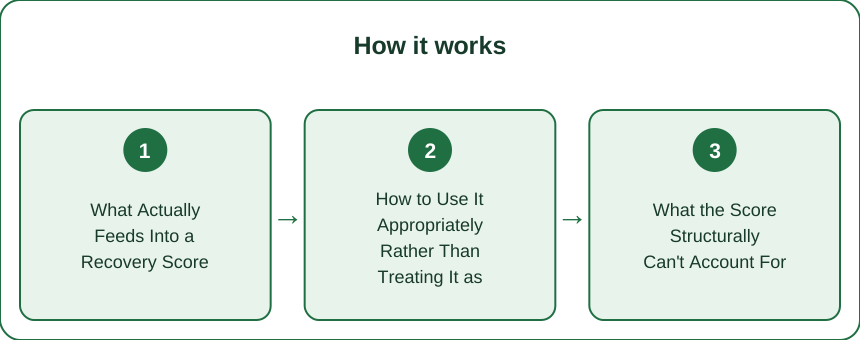
What the Score Structurally Can’t Account For
The blind spots: the the-acute-illness-onset-often-isnt-reflected-in-the-score-until-symptoms-are-already-present (the earliest hours of an oncoming illness often not yet showing up in HRV or sleep data at all, meaning a normal-looking score the morning symptoms begin isn’t a meaningful reassurance — the an-oncoming-illness-often-isnt-reflected-in-the-score-until-its-already-symptomatically-obvious), the the-acute-emotional-or-situational-stress-from-a-single-event-isnt-separated-out-from-general-physical-recovery (the score’s underlying HRV data reflecting nervous system state broadly, without distinguishing a stressful life event from actual physical training load, meaning a low score after a hard emotional day may say nothing about physical readiness specifically — the the-score-cant-distinguish-acute-emotional-stress-from-actual-physical-training-recovery-since-both-affect-the-same-underlying-hrv-signal), and the frame (the real blind spots as early illness onset and acute situational stress, both of which affect the same underlying signal the score relies on without the score being able to tell them apart from physical training recovery — one more reason to treat it as a partial input, not a complete picture).
A fitness tracker’s recovery score is built from genuinely noisy underlying inputs — heart rate variability, the primary driver for most scores, is itself sensitive to measurement conditions and sensor technology, sleep tracking data carries its own well-documented accuracy limitations that then propagate into the final calculation, and the specific algorithm converting these inputs into one number varies by brand and generally isn’t transparently published, making the result harder to independently evaluate. Using it appropriately means treating the general trend direction over several days as more meaningful than any single day’s precise score, cross-checking the device’s reading against your own honest subjective sense of how you actually feel since genuine mismatches are informative, and not letting one isolated low score alone override a planned training session without other corroborating signals like actual fatigue or soreness. The score also structurally can’t separate early illness onset or acute emotional stress from genuine physical training recovery, since both affect the same underlying signal it relies on — treating the score as one useful input rather than a precise, authoritative verdict.
Keep Reading
This article is for general informational and styling purposes only. Fit, sizing, and product availability may vary.