Heart-Rate Zones on Your Wrist: Using Wearable Data Without Worshipping It
The watch paints your workout in zone colors — blue, green, orange, red — and most wearers either ignore them or obey them religiously. The middle path: what zones actually mean, where wrist sensors lie and the feel-calibration that turns the numbers into a useful coach.

The Zone System Decoded
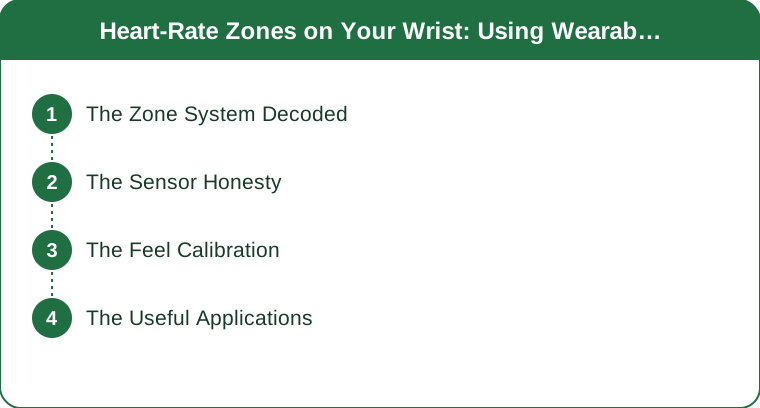
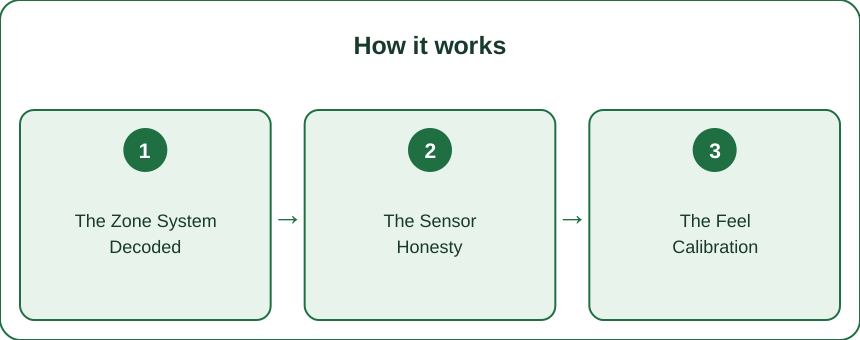
The colors translated: zones are effort bands anchored to your max heart rate (zone 2 — the conversational aerobic base where endurance builds; zone 3 — the comfortably-hard tempo tier; zones 4-5 — the interval territory where speed lives), the distribution wisdom (the endurance-training consensus runs most volume easy and a little hard — the 80/20-ish shape; the everything-in-zone-3 pattern is the classic self-coached plateau), and the max-HR honesty (the 220-minus-age formula misses individuals by 10-20 beats — the zones built on it inherit the error; the observed-max from a genuinely hard session calibrates better than the birthday math).
The Sensor Honesty
Where the wrist lies: optical sensors read blood flow through skin (decent at steady efforts, laggy-to-wrong during intervals, weight training and anything gripping — the wrist flexion that garbles the signal; the strength-session heart rate is half fiction), the fit factors (snug above the wrist bone, warmed-up skin — the loose cold-start watch reads noise), the chest-strap tier (the ECG-based straps remain the accuracy standard for interval work — the affordable upgrade for the genuinely zone-curious), and the trend-over-tick rule (the watch’s week-over-week resting HR and training-load TRENDS are reliable even when individual seconds aren’t — the aggregate forgives what the instant fumbles).

The Feel Calibration
Anchoring numbers to body: the talk test crosswalk (full sentences = zone 2, short phrases = zone 3, words = zone 4 — the calibration session that maps YOUR zones to YOUR sensations; run it once, own it forever), the nasal-breathing governor (the nose-only pace approximates the aerobic ceiling — the zone-2 check requiring no electronics), the RPE partnership (the 1-10 effort scale logged alongside the watch — where they disagree consistently, trust the body and recalibrate the zones), and the graduation goal (the athlete who can name her zone blindfolded uses the watch as confirmation — the data serving the feel it trained; the dependency running the other way is the worship problem).
The Useful Applications
Where the zones earn their pixels: the easy-day enforcement (the watch’s best job — the honest zone-2 ceiling that stops the slow creep into medium-everything; the alert that says slow down is worth the subscription), the interval timing (the recovery-between-efforts gauge — start the next rep when HR drops below your marker), the trend surveillance (the resting-HR drift and the elevated-morning readings — the overtraining-signs chapter’s dashboard), the progress receipts (the same route at the same HR getting faster — fitness, quantified kindly), and the permission-to-ignore clause (the joy-run with the watch face turned off is training too — the data serves the running, never the reverse). Numbers as coach, feel as captain.
Zones are effort bands, wrists lag intervals, calibrate with the talk test, let trends outrank ticks. Wearable zones are a decent coach and a terrible deity — train by feel, confirm by watch.
Keep Reading
This article is for general informational and styling purposes only. Fit, sizing, and product availability may vary.