Your Smart Ring and Watch Disagree About Your Sleep — Here's Why
Quick Answer: Smart rings and watches disagree on sleep scores mainly because of sensor placement and algorithm differences — rings tend to be more accurate for heart rate variability (better blood flow at the finger), while watches vary more by wrist looseness and skin tone interference.
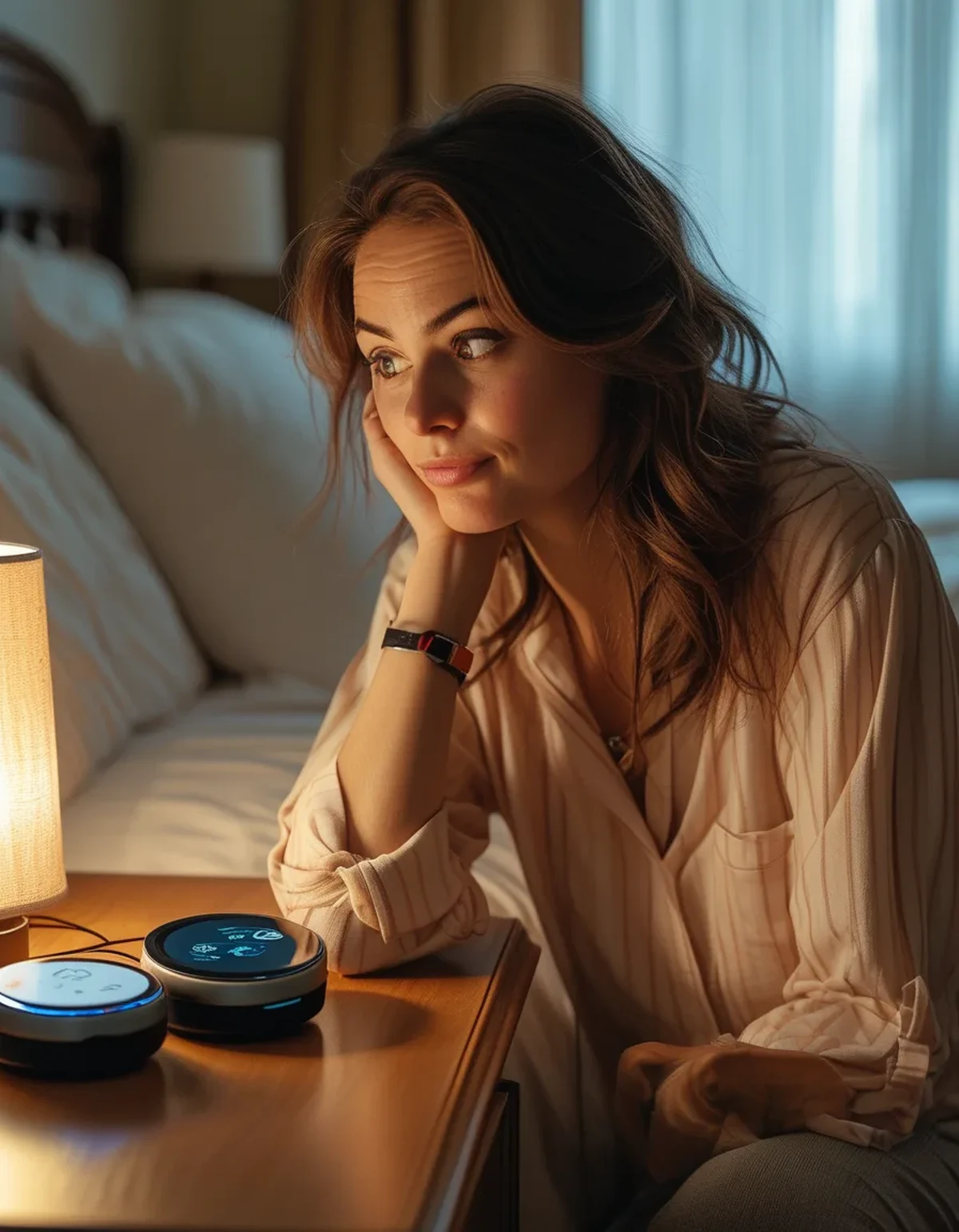
Same night, same bed, two different sleep scores from two different wrists. Neither device is lying — they’re just measuring slightly different things, in different ways.

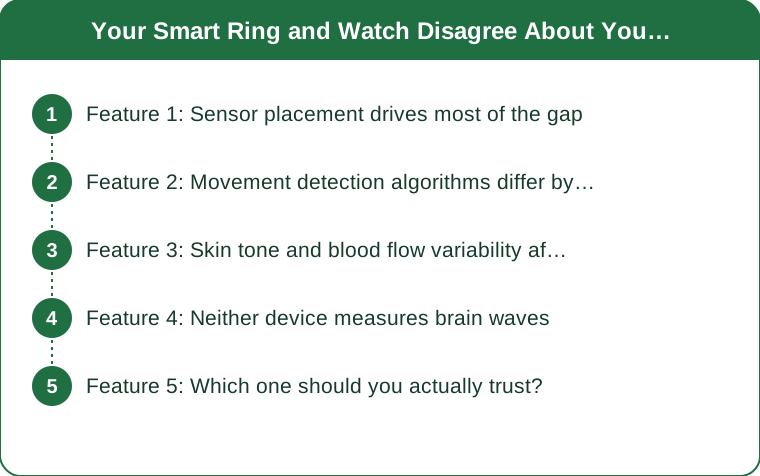
Feature 1: Sensor placement drives most of the gap
The finger has denser capillary blood flow than the wrist, which generally makes ring-based heart rate and HRV readings more stable overnight. Watches can lose contact if the band loosens during sleep, causing gaps or noise in the data that get algorithmically ‘filled in,’ sometimes inaccurately.
Feature 2: Movement detection algorithms differ by brand
Each company uses proprietary algorithms to translate raw motion and heart rate data into sleep stages (light, deep, REM). Because there’s no universal standard, the same physiological night can be classified differently — one device might call a restless period ‘light sleep’ while another calls it ‘awake.‘
Feature 3: Skin tone and blood flow variability affect optical sensors
Both rings and watches use optical (light-based) sensors that can perform less consistently on darker skin tones or in people with naturally lower peripheral blood flow — this is a documented, ongoing accuracy gap across the wearable industry, not specific to one brand.
Feature 4: Neither device measures brain waves
The gold standard for sleep staging is EEG (brain wave) monitoring, used in clinical sleep studies. Both rings and watches infer sleep stage from heart rate, movement, and sometimes temperature — an indirect method that explains why even the most accurate consumer devices show meaningful disagreement with clinical PSG studies, let alone with each other.
Feature 5: Which one should you actually trust?
For trend tracking (is my sleep getting better or worse over weeks), either device is useful since it’s internally consistent with itself. For absolute numbers (exactly how many minutes of deep sleep last night), treat both as estimates — rings edge out watches slightly in HRV accuracy in most independent validation studies, but neither replaces a clinical assessment if you have a real sleep concern.
TL;DR:
- Ring vs. watch sleep score gaps mostly come from sensor placement, not one being ‘wrong’
- Rings tend to read HRV more reliably; watches can lose contact if bands loosen
- No consumer wearable measures brain waves directly — both are estimating sleep stage
- Use either for trends over weeks; don’t treat either as a clinical-grade absolute number
Keep Reading
This article is for general informational and styling purposes only. Fit, sizing, and product availability may vary.