When to Ignore Your Tracker (The Data Is Not the Territory)
Wearables have become confident enough in their pronouncements that people now cancel training sessions on the strength of a readiness score, which is a lot of authority to hand to a wrist-worn estimate. Here is why the data misleads, when to override it, and how to use it healthily.

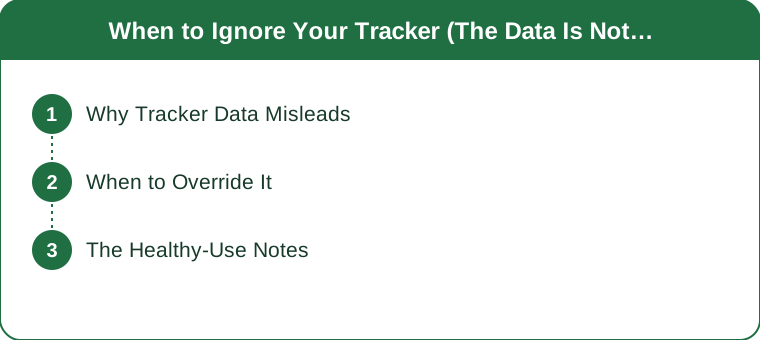
Why Tracker Data Misleads
Estimates presented as facts: the the-most-metrics-are-estimates (the most figures being modelled estimates rather than measurements from the accuracy-guide logic — the estimates-not-measurements), the the-they-are-presented-with-false-precision (the precise-looking numbers implying accuracy they lack from the accuracy-guide logic — the false-precision), the the-sleep-staging-is-approximate (the sleep stage data being particularly approximate from the sleep-tracking logic — the sleep-is-approximate), the the-calorie-figures-are-rough (the energy expenditure figures being notably imprecise from the accuracy-guide logic — the calories-are-rough), the the-a-score-cannot-know-your-context (the a readiness score not knowing your life from the tracker-obsession logic — the no-context), and the reframe (the tracker number as a modelled estimate presented with false precision — which is a great deal of authority for a wrist-worn device to hold over your training).

When to Override It
Trusting yourself instead: the the-when-you-feel-good-but-the-score-is-low (the feeling good despite a poor readiness score from the tracker-obsession logic — the feel-good-low-score), the the-when-you-feel-bad-but-the-score-is-high (the feeling unwell despite a good score from the tracker-obsession logic — the feel-bad-high-score), the the-when-it-did-not-record-the-activity (the the device missing or misreading an activity from the accuracy-guide logic — the missed-activity), the the-when-it-is-making-you-anxious (the the data itself generating anxiety from the tracker-obsession logic — the causing-anxiety), the the-when-you-slept-fine-but-it-says-otherwise (the disputed sleep data affecting how you feel from the sleep-tracking logic — the disputed-sleep), the the-when-it-conflicts-with-obvious-symptoms (the genuine illness outranking any score from the tracker-obsession logic — the symptoms-outrank), and the the-when-you-are-training-to-a-plan (the a sensible plan outranking a daily score from the get-the-most logic — the plan-outranks-score).
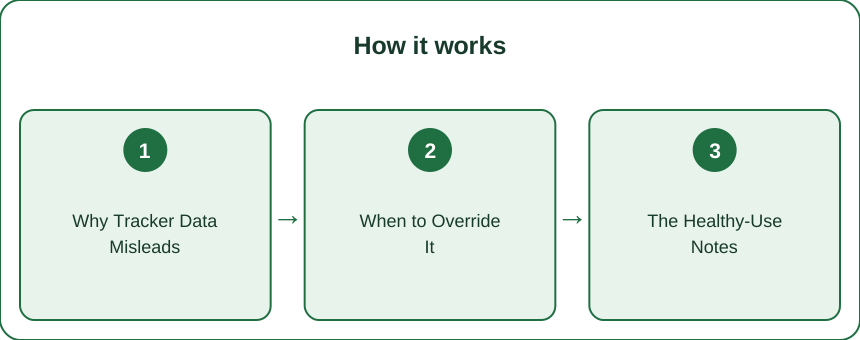
The Healthy-Use Notes
Keeping it useful: the the-use-trends-not-single-days (the weekly trends being far more useful than daily numbers from the get-the-most logic — the trends-not-days), the the-treat-it-as-one-input (the treating data as one input among several from the get-the-most logic — the one-input), the the-your-own-perception-is-data-too (the how you feel being legitimate data from the tracker-obsession logic — the perception-is-data), the the-turn-off-what-you-do-not-use (the disabling metrics you never act on from the tracker-obsession logic — the turn-off-unused), the the-take-breaks-from-wearing-it (the periodically not wearing it at all from the tracker-obsession logic — the take-breaks), the the-check-your-data-privacy-settings (the reviewing what data is shared from the data-privacy logic — the check-privacy), the the-it-should-support-not-dictate (the the device supporting rather than directing your training from the get-the-most logic — the support-not-dictate), and the frame (the tracker as one estimated input among several — read as weekly trends, overridden by how you actually feel, and periodically set aside entirely. Read trends rather than single days, treat it as one input, trust how you feel when they conflict, and take breaks from wearing it).
Wearables have become confident enough in their pronouncements that people now cancel training sessions on the strength of a readiness score, which is a lot of authority to hand to a wrist-worn estimate. Tracker data misleads because most metrics are estimates, they are presented with false precision, sleep staging is approximate, calorie figures are rough, and a score cannot know your context. Override it when you feel good but the score is low, when you feel bad but the score is high, when it did not record the activity, when it is making you anxious, when it disputes your sleep, when it conflicts with obvious symptoms, and when you are training to a plan. Use it healthily by reading trends not single days, treating it as one input, respecting your own perception, turning off what you do not use, taking breaks from wearing it, and checking your privacy settings.
Keep Reading
This article is for general informational and styling purposes only. Fit, sizing, and product availability may vary.