Getting the Most From Your Fitness Tracker (Without Obsessing Over It)
A fitness tracker can be a genuinely useful tool — or a source of anxiety and number-obsession. The difference is how you use it. Used well, it supports your habits without ruling them. Here is why trackers help when used well, how to get the most from one, and how to keep a healthy relationship with the data.

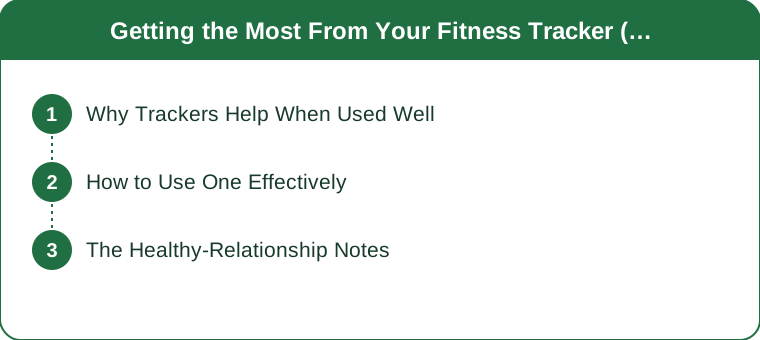
Why Trackers Help When Used Well
The upside of tracking: the the-awareness-and-motivation (the a tracker building awareness of your activity and motivating movement from the tracker-women logic — the the-awareness-boost), the the-progress-and-accountability (the seeing progress and staying accountable to your goals from the tracker-women logic — the the-accountability), the the-useful-data (the useful insights on activity, heart rate and sleep from the sleep-tracking logic — the the-data-value), the the-nudges-to-move (the reminders and nudges encouraging more movement — the the-nudge), the the-a-tool-not-a-master (the a tracker being a helpful tool when it serves you, not rules you from the obsession logic — the tool-not-master), and the reframe (the fitness tracker as a useful awareness and motivation tool when used well — supporting your habits without ruling them).

How to Use One Effectively
Getting real value: the the-focus-on-trends-not-daily-numbers (the watching trends over obsessing on daily figures from the obsession logic — the trends-over-days), the the-use-the-useful-metrics (the focusing on the metrics that genuinely help you from the heart-rate-zones logic — the the-useful-metrics), the the-understand-accuracy-limits (the knowing trackers estimate, not perfectly measure, from the accuracy logic — the take-it-as-a-guide), the the-set-realistic-goals (the sensible goals over arbitrary targets from the tracker-women logic — the realistic-goals), the the-use-heart-rate-zones (the heart rate zones to guide training intensity from the heart-rate-zones logic — the the-zones), the the-let-it-inform-not-dictate (the using the data to inform choices, not dictate them from the obsession logic — the inform-not-dictate), the the-free-vs-paid-features (the deciding which paid features are worth it from the running-app logic — the the-features-choice), and the the-mind-your-data-privacy (the being aware of fitness data privacy from the data-privacy logic — the the-privacy-note).
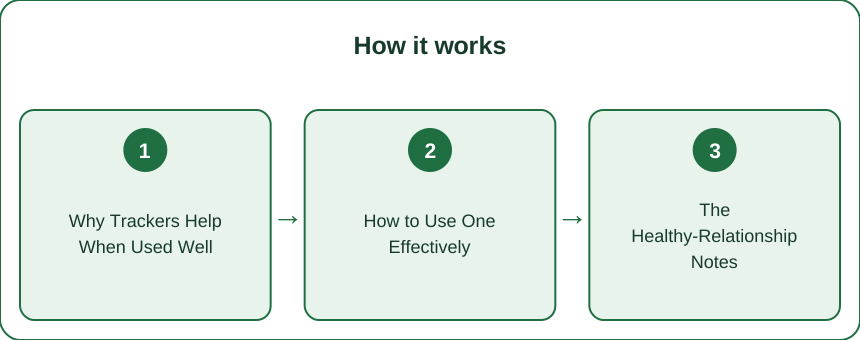
The Healthy-Relationship Notes
Keeping it healthy: the the-do-not-obsess (the not letting the numbers create anxiety or obsession from the obsession logic — the the-anti-obsession), the the-rest-days-are-good (the not feeling guilty about rest days or lower-activity days from the obsession logic — the rest-is-fine), the the-listen-to-your-body-too (the trusting how you feel alongside the data from the accuracy logic — the body-plus-data), the the-take-breaks-from-it (the stepping back from the tracker if it becomes stressful from the obsession logic — the break-when-needed), the the-numbers-are-not-the-whole-picture (the your health being more than the metrics from the obsession logic — the beyond-the-numbers), the the-use-it-to-support-not-pressure (the letting it support your habits, not pressure you — the support-not-pressure), and the frame (the fitness tracker as a trend-watching, body-aware tool used to inform rather than obsess — the most from it without the anxiety. Watch trends over daily numbers, use the metrics that help, trust your body too, and take breaks if it becomes stressful).
A fitness tracker can be a genuinely useful tool — or a source of anxiety and number-obsession — and the difference is how you use it. Trackers help when used well because they build awareness and motivation, provide progress and accountability, offer useful data on activity, heart rate and sleep, nudge you to move, and serve as a tool rather than a master. Use one effectively by focusing on trends over daily numbers, using the metrics that genuinely help, understanding accuracy limits, setting realistic goals, using heart rate zones, letting the data inform rather than dictate, choosing worthwhile features, and minding your data privacy. Keep the relationship healthy by not obsessing, embracing rest days without guilt, listening to your body alongside the data, taking breaks if it becomes stressful, and remembering the numbers are not the whole picture. The most from it without the anxiety.
Keep Reading
This article is for general informational and styling purposes only. Fit, sizing, and product availability may vary.